
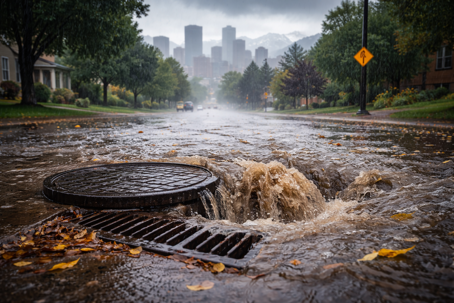
You are not imagining it if your drains act up after a deep freeze or a heavy spring storm in Denver. Many homeowners across the Front Range notice the same pattern, such as a basement floor drain that gurgles every spring or a main line that backs up right after a big snowmelt. It feels random and frustrating, especially when you are careful about what goes down the drains.
What most people never see is how Denver’s climate is working on their sewer line day after day. The soil around your pipe is freezing and thawing, drying out and then soaking up moisture, and tree roots are searching for water in a semi-arid environment. All of that movement and pressure happens out of sight, but it shows up inside your home as slow drains, recurring clogs, and sometimes very messy backups.
At Hyper Flow Service Company, we have been working on sewer lines across Denver and surrounding cities since 2016, from older clay lines in central Denver and Englewood to newer PVC in places like Parker and Broomfield. Our technicians see the same climate-driven patterns repeat every year. In this guide, we share the mechanics behind those problems and what you can do to spot issues early, plan maintenance, and reduce the risk of surprise emergencies.
How Denver’s Climate Puts Extra Stress on Your Sewer Line
Denver’s climate is not gentle on buried infrastructure. We live at a higher elevation with big temperature swings between day and night, long dry periods, and seasons that can jump from snow to 60 degrees in a day. Your sewer line sits a few feet underground in soil that responds directly to those changes. When the soil moves, shrinks, or swells, it transfers that stress to your pipe.
In many Denver neighborhoods, including older areas of the city, Lakewood, Arvada, and Englewood, homes still rely on original clay or cast iron sewer lines. Those materials were common when many houses were built, and they can perform well for a long time. Over decades in a climate like ours, though, they become more brittle and less able to flex when the ground shifts around them. Small weaknesses that did not matter in the first few decades of service often become problem points as the line ages.
Newer homes in places like Castle Rock, Centennial, or parts of Thornton and Brighton are more likely to have PVC lines. PVC can handle some movement better than clay or cast iron, but it still depends on stable support from the surrounding soil. When soil settles unevenly or cycles between saturated and dry, even PVC can develop bellies or joint issues. The key point is that Denver’s climate keeps the ground in motion, and your sewer line is caught in the middle.
Because our team works across the metro area, we see how these conditions play out in real systems. We routinely find lines where the soil has shifted enough to create a low spot, or where a joint has opened just a fraction of an inch after years of freeze-thaw. Those small changes are all it takes to start catching waste, letting roots in, or allowing groundwater to enter the pipe. Understanding that connection between climate, soil, and pipe material is the first step in staying ahead of sewer trouble.
Freeze-Thaw Cycles Can Crack and Shift Aging Sewer Pipes
One of the most damaging patterns for sewer lines in Denver is the freeze-thaw cycle. When moisture in the soil around your pipe freezes, it expands. That expansion pushes against everything nearby, including the pipe itself. When the temperature warms up, the ice melts and the soil contracts again. This cycle can repeat many times through the winter and early spring.
Clay and cast iron sewer lines do not handle this kind of constant movement well. Over time, the repeated pushing and pulling can cause tiny cracks along the pipe or at the joints where sections connect. Those cracks can widen, and joints can shift out of alignment. Even a small offset can create a lip where solids catch and start to build a blockage, or a gap where roots and groundwater find their way in.
As the soil heaves and settles, sections of pipe can also sag, creating what plumbers call a belly. In a belly, wastewater slows down and sits longer than it should. Solids settle out, and grease can cool and stick to the pipe. When freeze-thaw movement continues season after season, these bellies often get more pronounced, which is why some homeowners notice their sewer issues getting worse each winter and spring.
We see the evidence of this on camera inspections right after cold snaps and in early spring across Denver, Littleton, and Westminster. Our technicians often find offset joints, cracks, and standing water in sections of pipe that line up with where the soil around the house has moved the most. When a homeowner tells us their main line usually backs up in late winter, we know to look closely for freeze-thaw damage. Catching that damage early gives you more options than waiting until the line fails completely.
Soil Movement, Drought, and Heavy Moisture Change the Shape of Your Sewer Line
Temperature is not the only factor that moves the ground around your sewer. Moisture changes play a huge role in many parts of the Denver region. Certain soils in the Front Range, including some clays, shrink when they dry and then swell when they take on water. That constant change in volume puts pressure on anything buried in or on top of the soil, including your sewer line and foundation.
During extended dry periods, the soil can pull away and leave voids or softer spots under sections of pipe. When the next rainy stretch hits, or when snow starts to melt, that same soil can swell and exert new pressure on the pipe from different angles. This uneven support often leads to sections of the pipe settling more than others, which creates bellies or low spots. In other areas, joints may be pulled apart just enough to cause misalignment.
From a homeowner’s perspective, this shows up as slow drains that never quite return to normal, or clogs that come back more often, especially after big weather events. When we run a camera through those lines, we frequently see segments where wastewater is standing instead of flowing freely. That standing water is a sign the pipe has changed shape under the influence of shifting soil and varying moisture, not just a simple blockage from something that went down a toilet.
At Hyper Flow Service Company, our technicians approach these situations with a full-system mindset. We do not just punch through a clog and leave. We assess the broader plumbing infrastructure, looking for bellies, offsets, or signs of settlement that could keep causing problems. By identifying these underlying soil and alignment issues, we can talk honestly about whether targeted maintenance will manage the risk or if a section of the line needs repair or replacement. That conversation is based on what we see in your specific line, not a one-size-fits-all recommendation.
Tree Roots Seek Out Sewer Lines in Denver’s Semi-Arid Climate
Denver’s semi-arid climate means trees and shrubs are always searching for water. Even well-watered yards can leave roots hungry during dry stretches. Sewer lines offer a consistent source of moisture and nutrients, especially where small leaks already exist from climate and soil stress. For roots, those small leaks are an invitation.
When freeze-thaw cycles or soil movement open a tiny gap at a joint or create a fine crack in the pipe wall, moisture from inside the sewer seeps into the surrounding soil. Roots sense that moisture and grow toward it. Once they reach the pipe, they push into the opening and start to expand along the flow of water and waste. Over time, what started as hair-like roots can become dense masses that catch everything passing through the pipe.
In Denver neighborhoods with mature trees, such as parts of older Denver, Lakewood, and Littleton, we see this pattern frequently. Homeowners often report slow drains that gradually worsen, or lines that back up again just months after a basic cable cleaning. When we send a camera down, we commonly find root balls exactly at weak joints or cracked sections, especially in older clay lines that have already been stressed by soil and climate conditions.
Our team uses sewer cameras to pinpoint where roots have entered and how severe the intrusion is. In many cases, hydro jetting can clear the roots more thoroughly than simple cabling, and we can pair that with a maintenance plan to manage regrowth. In other situations, the pipe is so damaged that roots will keep finding their way in, and we walk you through repair or replacement options. The key is that root problems usually start with climate and soil creating that first opening, not just with bad luck or a single bad flush.
Storms, Snowmelt, and Groundwater Can Overload Your Sewer System
Heavy moisture events are another way Denver’s climate impacts your sewer line. During rapid snowmelt or intense summer thunderstorms, the groundwater level around your home can rise quickly. If your sewer line has cracks, offsets, or loose joints from years of soil and temperature stress, that groundwater can push into the pipe. This process adds extra water that your line was never designed to carry.
When infiltration is significant, your sewer may be handling not just household wastewater, but also a stream of groundwater during storms and melt periods. That added flow can overwhelm the line, slow down the movement of solids, and increase the chance of a backup into your home. In some cases, cracks and gaps also let roots and fine debris enter, which further narrows the pipe and makes it even more susceptible to weather-related overloads.
Basements and lower levels are especially at risk in this kind of scenario. Floor drains, laundry drains, and basement bathrooms are often the first places where backups appear when sewer lines are stressed by groundwater and extra flow. If a line is already compromised, it takes less of a storm or melt event to push it past its capacity, so problems can seem to appear “out of nowhere” during certain weather patterns.
We regularly see spikes in calls during and after big weather events in places like Aurora, Commerce City, and Westminster. Our team is available seven days a week, with 24-hour emergency support and same-day appointments, because these issues do not wait for business hours. Along with clearing the immediate problem, we look at whether sump pumps, floor drains, and backwater valves are set up correctly, and whether the sewer line itself is letting groundwater in through damaged segments that may need excavation or targeted repair.
How to Tell if Climate Is Damaging Your Sewer Line
From the surface, it can be hard to know whether you are dealing with a simple clog or a climate-stressed sewer line. Pay attention to patterns. If your whole house slows down at once or multiple fixtures on the lowest level gurgle or back up, especially in certain seasons, that usually points to a main sewer issue rather than a single fixture problem.
Watch for symptoms that seem to follow Denver’s weather. Maybe your basement floor drain bubbles every spring as snow melts, or your main line tends to back up after a couple of big summer storms. You might notice a patch of yard that stays soggy even when you are not watering heavily, or a section of ground that seems to be sinking slightly along the path where the sewer exits your home. All of these can be signs that soil movement, groundwater, or pipe damage is at work.
Another red flag is repetition. If you have had your main line cabled more than once in a year and the problem keeps returning, especially during similar weather conditions, there is a good chance that climate and soil have changed the shape or integrity of the pipe. In our experience across Denver, Littleton, Thornton, and other communities, that kind of recurring pattern is rarely solved by one more quick snake. It usually calls for a closer look at the overall condition of the line.
At Hyper Flow Service Company, we start by listening to the full history of the issue, including when backups or slowdowns tend to occur. Then we use a sewer camera to see exactly what is happening underground. This combination of your observations and visual inspection lets us separate simple usage-related clogs from deeper problems like bellies, cracks, offsets, or root intrusion that are tied to Denver’s climate and soil conditions. From there, we can outline options that match what is really going on in your line.
Preventative Steps Denver Homeowners Can Take to Protect Sewer Lines
You cannot change the climate or the soil under your home, but you can take practical steps to reduce the risk of sewer surprises. The first is to understand your starting point. If you live in an older Denver-area home with original sewer lines, or you have large trees near the path of your sewer, a camera inspection is a smart baseline check. Many homeowners choose to do this when they buy a property, but it is just as valuable if you have lived there for years and never seen the inside of your line.
For homes with older clay or cast iron lines, or those with documented issues like minor bellies or early root intrusion, we often recommend periodic inspections and planned maintenance. That could mean hydro jetting or cabling on a schedule tailored to how fast roots tend to grow back in your soil conditions. In some cases, descaling older cast iron can smooth the pipe interior so debris is less likely to catch and build up, which matters more when climate and soil movement have already made the line less forgiving.
Timing matters. In Denver’s climate, many homeowners choose to schedule proactive inspections and maintenance in late fall or early spring. Late fall gives you a look at the line before deep cold and freeze-thaw cycles hit. Early spring shows how the line is handling snowmelt and higher groundwater. Either way, planning in advance usually costs less than an emergency call during a backup, and it gives you more room to consider different repair or maintenance options.
Before major cold snaps or big storms, it also helps to pay attention to how your drains are behaving. If everything suddenly slows down, or you hear gurgling in lower-level drains, that can be a sign to get the line checked before weather adds even more stress. Knowing where your cleanout is, and making sure it is accessible, can also shorten the time it takes to diagnose and clear problems if they do occur. These small steps give you more control in a situation that can otherwise feel unpredictable.
We know that sewer work can be an unexpected expense. Hyper Flow Service Company offers free, no-obligation estimates, transparent pricing, and flexible financing options, so you have a clear picture of costs before you move forward. Our goal is to help you use inspections and maintenance to prevent avoidable emergencies, and to plan larger repairs or replacements in a way that fits your home and budget.
Work With a Denver Plumbing Team That Understands Climate Impact
Climate impact on your sewer system is a full-system issue. It is not just about clearing one clog, it is about understanding how Denver’s temperature swings, soil movement, storms, and tree growth are shaping the entire line under your yard. Addressing that kind of problem effectively means looking at the big picture, not just sending a cable down the pipe and hoping for the best.
Since 2016, our team at Hyper Flow Service Company has been working on sewer and drain systems across Denver, Arvada, Aurora, Boulder, Brighton, Broomfield, Castle Rock, Centennial, Commerce City, Englewood, Lakewood, Littleton, Longmont, Parker, Thornton, and Westminster. We use advanced tools like sewer cameras and hydro jetting equipment, and we coordinate with local inspection agencies and permitting offices when repairs or replacements are needed. Our technicians are licensed, insured, and trained to explain what they see in plain language, so you can make informed decisions.
Clients across the metro area mention how quickly we respond, how tidy we keep our workspaces, and how clearly we communicate from the first assessment to the final cleanup. That consistency has helped us earn a 4.9-star rating across hundreds of reviews, an A+ rating from the Better Business Bureau, and approval from HomeAdvisor. We do not rely on high-pressure sales tactics. We present your options, walk you through the pros and cons, and let you decide what makes sense for your home.
If you recognize some of the patterns described in this guide, or if you simply want to know how Denver’s climate is affecting your sewer line, we can help you get clear answers. A camera inspection or preventative maintenance visit today can help you avoid a flooded basement during the next storm or thaw and gives you more control over how and when sewer work happens at your property. To schedule an assessment or ask questions about your specific situation, contact Hyper Flow Service Company.